
How to face informal and Institutional denial with the strategies employed by Diplomacy 2.0
In the complex landscape of international relations, entities lacking formal state recognition, could face informal and Institutional denial. In this article we explore how non-recognized actors navigate a system designed to exclude them and detailing the strategies employed by Diplomats 2.0 to overcome these barriers.
Navigating Informal and Institutional Denial in Diplomacy 2.0
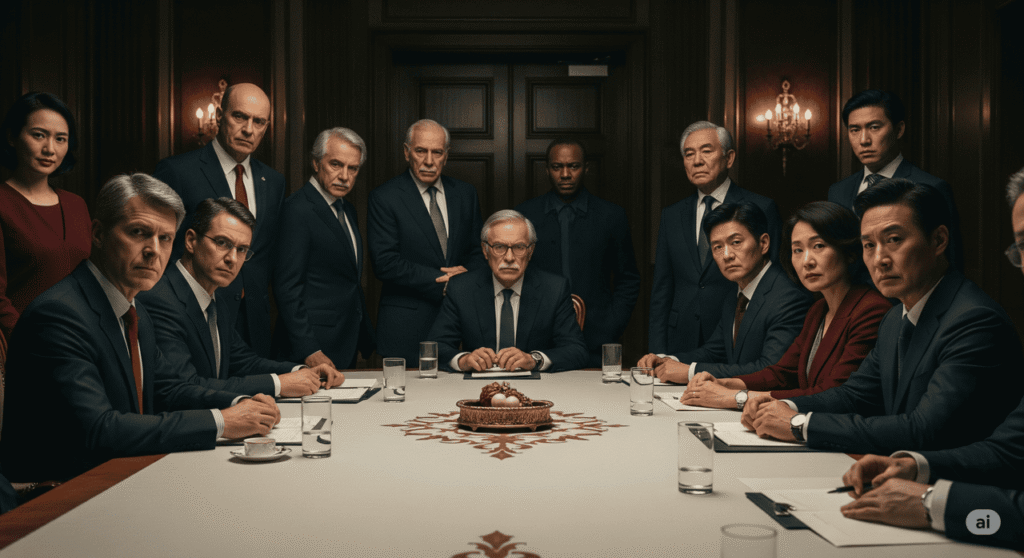
The world, as we know it, is structured upon an international system that, despite being formally multilateral, still operates with a profoundly exclusionary logic. This system is built on the Westphalian state model, where diplomatic recognition and access to negotiation, cooperation, and legitimacy are largely reserved for a limited number of actors meeting criteria such as territorial sovereignty, centralized government, recognized borders, and formal relations with other states. This foundational structure creates what can be understood as institutional denial for entities that do not fit this traditional mold.
The architecture of international diplomacy, therefore, does not account for a more complex and diverse reality, leaving out peoples, governments in exile, self-determination movements, organized indigenous communities, transnational actors without fixed territory, and even de facto administrations. These collectives, often historically silenced or invisibilized, pursue legitimate causes from an ethical, political, or historical perspective but do not fit within the traditional frameworks of International Law or existing multilateral institutions. This systemic exclusion constitutes a clear form of institutional denial of their status and rights within the formal international arena. The concept of the Diplomat 2.0 has been conceived precisely for these actors: those who must represent without status, speak without a microphone, and sit at the table without being invited.
The Manifestations of Institutional Denial
Institutional denial is evident in several aspects of the traditional diplomatic system:
- State Centrality: The system is built on the centrality of the state as the legitimate international actor, mutual recognition among sovereign states, and multilateral organizations controlled by these states. This inherently excludes non-state actors, regardless of their political or social legitimacy.
- Exclusionary Mechanisms: International forums often have strict admission criteria, forcing Diplomats 2.0 to operate in parallel spaces and employ strategic creativity to gain visibility without being rejected outright. Territories in dispute, unresolved self-determination processes, governments in exile, and non-state actors with international projection are structurally excluded.
- Lack of Formal Recognition: A Diplomat 2.0 represents an actor—a territory, government, community, or cause—that is not officially recognized by most states or multilateral organizations. This means they typically lack access to embassies, immunities, or bureaucratic structures. For example, a de facto state does not automatically acquire rights and obligations from treaties like the Vienna Convention on Diplomatic Relations of 1961, which is designed for mutually recognized sovereign states. Without formal recognition, there is no legal obligation to apply its provisions.
- Absence of Diplomatic Immunity: The most direct consequence of institutional denial is the lack of automatic diplomatic immunity. Diplomatic immunity, codified in the Vienna Convention, applies only when a diplomat is formally accredited and accepted by a receiving state. A Diplomat 2.0 does not inherently enjoy this immunity unless officially appointed by a recognized sovereign state, part of a special mission accepted under the 1969 Convention on Special Missions, or if bilateral or multilateral agreements expressly grant such privileges.
The Realities of Informal Denial
Beyond the formal structures, informal denial refers to the practical, day-to-day challenges and subtle forms of rejection faced by Diplomats 2.0. These often arise from the discretion of states or actors who, while not formally denying existence, choose not to engage or actively undermine the non-recognized entity.
- Hostility and Criminalization: States that deny recognition, particularly “imperialist, colonialist, and dictatorial” ones, may criminalize or persecute those acting diplomatically on behalf of an unofficial cause, leading to real personal and political risks. This creates a hostile communication environment where the legitimacy of the message is questioned or denied, and official channels are blocked.
- Limited Resources and Ambiguity: Due to the absence of state funding, diplomatic tasks often rely on solidarity networks, self-management, or limited international support. The Diplomat 2.0’s position is inherently ambiguous: they represent, but not officially; they speak, but cannot always be cited; they participate, but rarely vote. This constant ambiguity can be a source of frustration or, if managed tactically, a tool.
- Discretionary “Courtesy Treatment”: Unlike diplomatic immunity, which is legally binding, “courtesy treatment” is discretionary. It is granted by the receiving state based on its sovereignty and political convenience, and it can be revoked at any time without violating international treaties. While it can offer practical benefits like preferential access or invitations to official events, its informal nature means it can be denied at will, representing a form of informal denial of privileges.
- Persona Non Grata Declarations: While serious crimes committed by recognized diplomats are not exempt from international consequences, a receiving state cannot formally prosecute them while immunity is held. However, it can declare the diplomat persona non grata, expelling them and requesting the accrediting state to waive immunity. For a Diplomat 2.0, where even basic courtesy is discretionary, such a declaration or a simple refusal of entry can be a powerful manifestation of informal denial.
Strategies for Overcoming Informal and Institutional Denial
To counter informal and institutional denial, Diplomacy 2.0 emphasizes symbolic power, social legitimacy, language, and behavior as instruments of political interlocution.To counter informal and institutional denial, Diplomacy 2.0 emphasizes symbolic power, social legitimacy, language, and behavior as instruments of political interlocution.
- Building Symbolic and Narrative Legitimacy: In the absence of formal recognition, symbolic legitimacy and a strong narrative become crucial. This involves projecting an identity that connects with shared values, historical memory, and a sense of justice. Diplomats 2.0 are “political storytellers,” translating complex realities into relatable narratives that generate empathy and support globally.
- Ethical Conduct and Coherence: Ethical behavior is fundamental for legitimacy when formal recognition is absent. Coherence between discourse and action, honesty, loyalty to the mandate, respect for diversity, strategic discretion, and transparency are essential principles. This ethical framework is critical for countering informal and institutional denial by building credibility and trust.
- Strategic Communication: In hostile or ambiguous environments, clear, consistent, and empathetic communication is vital. This includes adapting messages for different audiences, leveraging digital media, and preparing for crisis management to counteract adverse narratives or disinformation.
- Leveraging Informal Spaces: Diplomats 2.0 actively participate in informal multilateral spaces such as civil society summits, thematic forums, and non-state regional gatherings. These “grey areas” allow unrepresented causes to gain visibility, build support networks, and engage in global debates, circumventing the structures of institutional denial.
- Network Building: Establishing strong networks with civil society organizations, international bodies (even if non-recognizing), media outlets, and academia is a vital necessity. These networks function as channels for disseminating narratives, generating support, and strengthening symbolic legitimacy, especially where formal channels are blocked.
- Dignity and Firmness in Adversity: When facing governments that deny their legitimacy, Diplomats 2.0 must maintain a dignified yet firm demeanor, avoiding personal confrontations and defending their legitimacy with clear arguments. They seek non-conventional channels of communication, manage meetings with a conciliatory but firm attitude, and prioritize safety and privacy.
- Resilience and Opportunity: Facing exclusion and isolation can be frustrating, making resilience essential. The Diplomat 2.0’s approach is to transform adversity into opportunity, using official rejection as a platform to increase international visibility, generate solidarity, denounce violations, and innovate diplomatic and communication strategies.
So we know that, informal and institutional denial is a pervasive reality for actors operating outside the traditional state-centric international system. However, the emergence of Diplomacy 2.0 offers a strategic and ethical roadmap for navigating these challenges. By focusing on building symbolic legitimacy, engaging in strategic communication, leveraging informal networks, and maintaining unwavering dignity, Diplomats 2.0 continue to challenge the status quo, creating new pathways for recognition and influence in a world still grappling with deeply entrenched exclusionary logics. Their work represents a constant effort to assert political existence and moral authority where formal structures attempt to negate it.